Veronica: from Italy to Barcelona
Veronica Saba’s story takes us to Spain — and more precisely to Barcelona, the Mediterranean metropolis where history, languages, and social movements meet. Set between sea and mountains, Barcelona is a city of neighbourhood life and international energy: a place where you can feel the rhythm of daily routines in the plazas, while also finding a dense ecosystem of NGOs, institutions, and projects connected to Europe and the wider world. For someone working in the social sector, it can be both a stimulating professional context and a powerful personal reset.
Let’s turn to our testimonial. This is how Veronica introduces herself:
“I studied Social Policies in Milan, and my path has always been tied to what I care about most: migration, gender, and intersectionality. I’ve worked in different roles – from European projects to fieldwork, to training – and I’ve always tried to keep my professional work connected to social and political commitment.”
 A professional journey guided by passion
Veronica earned her master’s degree in Social Policies in Milan in 2015, with a thesis focused on gender-based violence and migration. Soon after graduating, she worked on a European project dedicated to the mental health of unaccompanied minors. While involved in this work, she won a PhD opportunity that brought her to Trieste, where she carried out fieldwork in border areas, collaborating with NGOs engaged in migration-related support and advocacy.
After completing her doctorate, she continued working on the ground – including as an anti-trafficking operator – and over time she increasingly specialised as a trainer on migration and gender issues, integrating participatory methodologies and the skills she developed through activism and community-based work.
“Working directly with people is meaningful, but it can also be intense. I learned a lot in the field, and at the same time I realised I needed space to rethink my direction – especially because I wanted to move more toward project design and management, something I’d already touched in the past but never had enough time to focus on.”
Choosing Barcelona and stepping out of the comfort zone
After several demanding years, Veronica decided to take a sabbatical year – a pause to reorder priorities and redefine goals. During that period, she felt the need for a change of air and a larger, more dynamic environment. Barcelona became the natural choice: a city she already knew from her Erasmus experience, where she could build on an existing connection to the language and the context – without pretending it would be “easy.” “Even if you know the city, moving is still moving. It’s still migration – a privileged one, of course – but it means rebuilding your network, finding safe places, and starting again in a new system.” In November (before the move), she travelled to Barcelona to explore the possibilities on the ground and understand whether there was space for her professional profile. At the same time, she began looking for a framework that could make the transition safer and more structured. That’s where EURES TMS came in.
Discovering EURES TMS
Veronica had heard about EURES through friends who had used similar European mobility opportunities before her. Their experiences helped her see EURES TMS as more than “just a programme” a concrete support system to take a step forward with guidance. “I knew I wanted to move, but I didn’t want to do it blindly. Having the backing of a European project, and people who could guide me through the steps, made it feel more sustainable and real.”
The support of the EURES advisers
Throughout the process, Veronica was supported by EURES advisers who helped her navigate procedures and decisions: first Miriam Del Bianco (until September), then Ornella Ceschia. “With them, I never felt alone in the process. Sometimes, at the beginning, a few steps weren’t completely clear – especially around how different parts of the programme worked — but the ongoing support helped me understand what to do and when.” Their guidance covered key practical aspects: clarifying the pathway from application to arrival, supporting the job-search and placement steps, and explaining the tools available within EURES TMS – from interview support to training and recognition of competences.
From application to arrival: making the move concrete
Once accepted into the project, the “real work” began: aligning timelines, understanding what documentation was needed, and preparing for a new professional and cultural context. What mattered most for Veronica was having a structured process: not only the administrative side, but also the chance to prepare intellectually and professionally for a different system. “You don’t just change a job – you change a legal framework, procedures, ways of working, even the vocabulary of social policies. Having support while you learn those differences makes a huge impact.”
The benefits used: training, recognition, and practical help
Among the programme’s opportunities, Veronica particularly valued the components that strengthened her ability to work well in the new context.
Training Programme (TP)
A key step was the specific training, including a programme focused on methodologies of reception and support (with attention to legal, psychological, and procedural aspects), useful for understanding differences between Italy and Spain and for sharpening her tools on the ground.
Recognition of competences (Recognition)
The recognition process was also activated (and, as is often the case with formal procedures, can take time), supporting the long-term goal of positioning her skills clearly within the host-country framework.
Mobility / Relocation support (Mobility)
Housing is a major challenge in big cities, and Barcelona is no exception. For Veronica, practical financial support related to moving and accommodation costs was an important element – a concrete help at the moment when many expenses concentrate.
“It’s a small lifeline at the right time. When you’re arriving, you have deposits, rent, documents, transportation – support for those first costs can be what makes the difference between ‘I’d like to’ and ‘I can’.”
 Living and working in Barcelona: growth on the field and in life
In Barcelona, Veronica had the chance to consolidate her experience through direct work with people and organisations, while expanding her professional network in an international environment. On a personal level, living in a bigger city allowed her to reconnect with the energy she was missing: new relationships, new spaces, and the feeling of being “in the crowd” again. “Building a new network is a job in itself – but it’s also what makes the experience rich. You learn how to orient yourself again, how to find your places, how to connect professionally and personally.”
A meaningful lesson: safety, courage, and openness
Looking back, Veronica describes EURES TMS as a way to step outside the comfort zone without losing stability – a protected space where taking risks becomes more possible. “For me, it’s a safe opportunity to try international mobility seriously, grow professionally, and still keep the door open for the future — including the possibility of returning to Italy.”
Advice for anyone considering a similar move
We close the interview by asking Veronica what she would say to those who are thinking about working abroad but feel uncertain. “Don’t be afraid to take the first step – but don’t feel you have to do everything alone. Use the tools that exist. EURES TMS is a salvagente: it supports you practically, it helps you understand the process, and it makes the transition less overwhelming. If you’re curious and open, the experience can really shift your perspective.”
And we thank you, Veronica, for sharing your experience with our community.
Don’t be afraid to take the first step — but don’t feel you have to do everything alone. Use the tools that exist.
Veronica, Social Worker
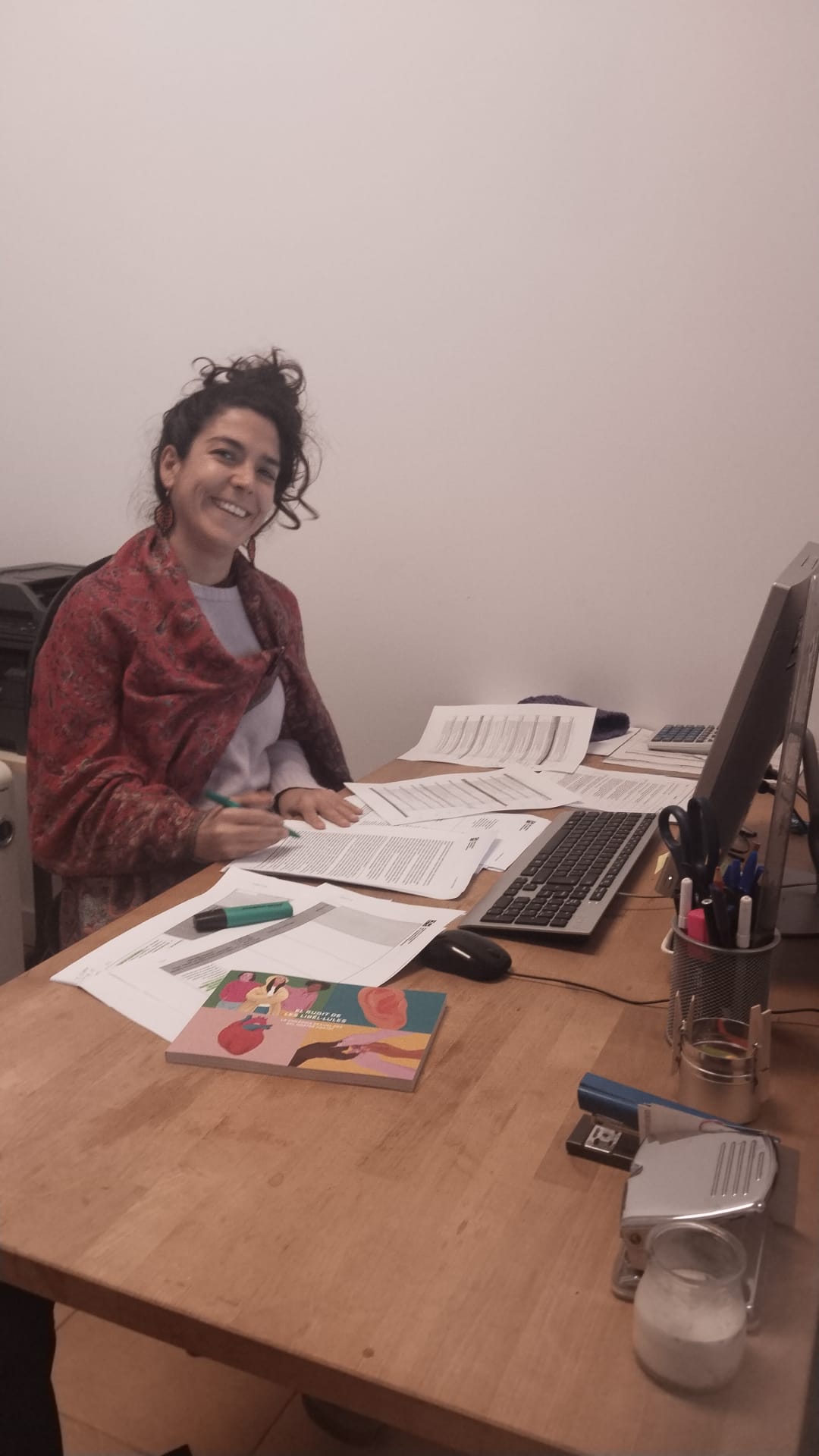
European mobile worker: Veronica
From: Italy
Currently engaged in: Spain
Contract: Job